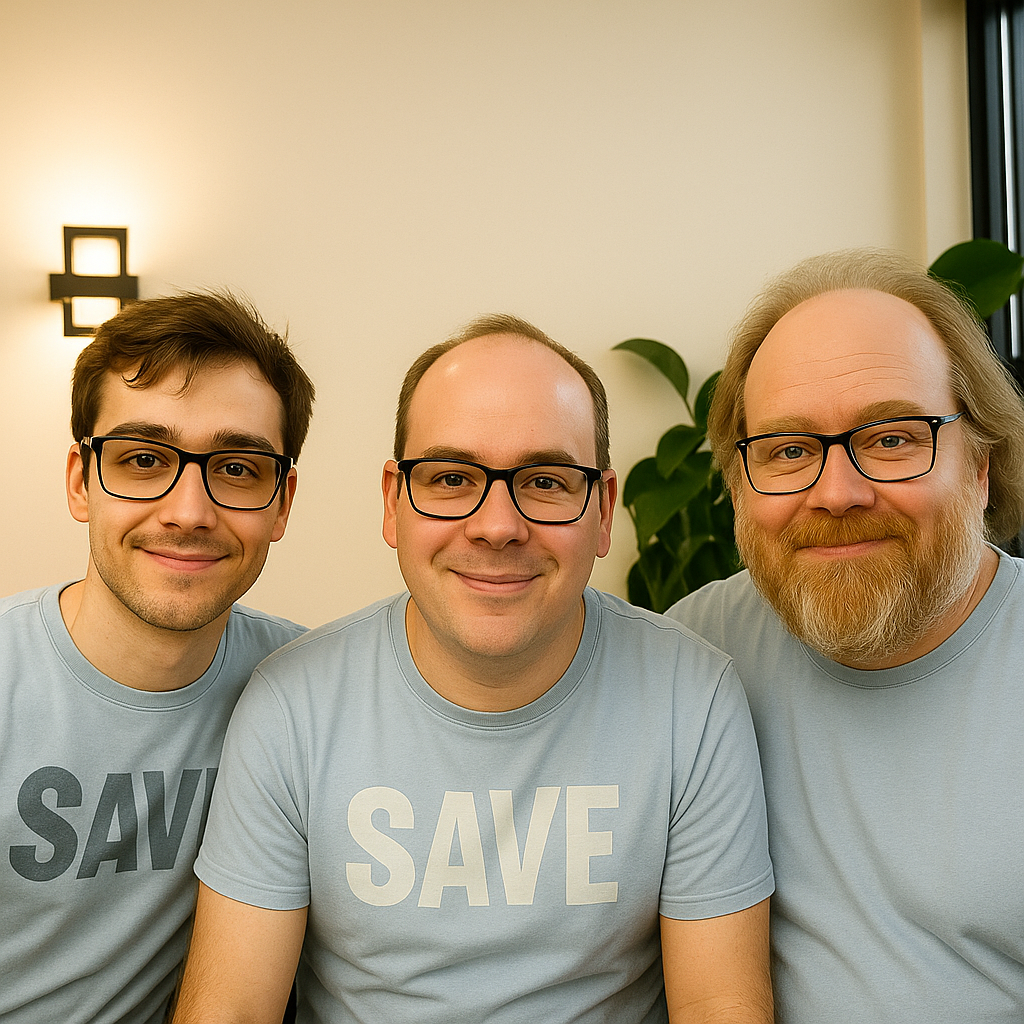
For my presentation “Visual Studio Code: One Tool to Rule Them All?” I created two fictional characters: Ryan and Eric. Both are software developers, but they take very different approaches to their work.
A colleague of mine suggested I write a blog post to introduce them properly. Everyone who heard my story about them immediately recognized these two archetypes. Even presenters who spoke after my session started using Ryan and Eric in their talks. So let’s give them the spotlight they deserve, right?
Meet Ryan
Have you met Ryan? Ryan is a young developer, fresh out of college. He has a couple of core qualities: he learns fast, is curious and loves new technologies. Ryan probably has more unfinished projects on his laptop than finished ones.
🤖 The images of Ryan and Eric are AI-generated using Sora, by providing my own image as input and describing the character traits.

Ryan - fast, experimental, shortcut-obsessed
Ryan is the kind of person who uses hip IDEs like Visual Studio Code, because it is lightweight and fast. Ideally Ryan would like to use his phone to code on the go, while watching his favorite series on Netflix.
“Move fast and fix things later.” - Ryan
When you have a Ryan on your team, you will notice that he will run before thinking his actions through. He will push fast to production, only to find out later that something is broken. But hey, at least he tried, right? And if he is just as fast to fix it again, everything is fine.
Meet Eric
Eric is a seasoned developer with years of experience. He is pragmatic, values stability and prefers to stick to tried-and-true tools. Eric will start Notepad++ to quickly format his XML or JSON or compare files. He has been using and running projects in Visual Studio for years. He jokes that you cannot write any good code in Visual Studio Code, because where is the “Play” button to start the project? Not to mention how do you debug without it?

Eric - stable, cautious, prefers proven tools
When you have an Eric on your team, you will notice that he will take his time to think things through. He will criticize decisions beforehand knowing that changing things later will be costly. Why change when you have worked this way for years?
“If it ain’t broke, don’t fix it.” - Eric
A conversation between Ryan and Eric
If Ryan and Eric were to have a conversation, it might go something like this:
Having multiple PR’s open
Context: Eric leans back.
Rule 1: No more than two open PRs at a time.
Writing an ADR
Context: A new framework is being discussed. Ryan is already prototyping.
ADR Rule 1: Capture the problem, the options, and why we picked this one.
Setting up SQL Server
Context: Eric is setting up his new development machine and needs SQL Server.
docker run -d -p 1433:1433 mcr.microsoft.com/mssql/server
Ryan and Eric
These two fictional characters represent two very different behavior patterns in software development teams. Ryan pushes for speed and experimentation; Eric optimizes for stability and predictability. Most of us have both inside us, and the trick is to know when to lean into which.
Let’s introduce an example I myself encounter often: My colleague acts like Eric. He locks his computer using Ctrl+Alt+Del and selects ‘Lock’ from the menu. I think he should use Ryan to optimize his workflow. I, on the other hand, use Windows+L to lock my computer instantly. The same pattern shows up in formatting code, switching screens, or running builds: you can click your way through, or you can invest in shortcuts and automation. Ryan would use Windows+P to extend his screen while Eric would right click on his desktop and select ‘Display settings’ to do the same.
The tension between Ryan and Eric is useful. Ryan pulls the team toward new tools and faster workflows; Eric stops us from breaking production every week. Healthy teams make space for both.
Conclusion and discussion
Ryan and Eric are two fictional characters that represent two extremely different behavior patterns in software development teams. You can act like Ryan or Eric, but you should use both to balance innovation and stability. I hope Ryan and Eric will return in future blog posts as well. If you want to refer to them, you are welcome to do so. Please link back to this post.
Let’s set the mode accordingly:
|
|
What about you? Are you more like Ryan or Eric? Or do you have another archetype in mind? Let me know in the comments!
Further reading
I wrote an Ryan-like article before read it here: Mart’s Cheatsheet


